7 Mistakes You're Making with Your HMO Compliance Checklist (and How to Fix Them)
7 Mistakes You're Making with Your HMO Compliance Checklist (and How to Fix Them)

Managing a UK HMO isn't just property management. It’s a high-stakes compliance game. One missed date. One lost certificate. One £30,000 fine.
Local councils are tightening the screws. With the Renters’ Rights Act and increased "Additional Licensing" zones, the margin for error is zero. If you’re still running your portfolio on a battered Excel sheet and a prayer, you’re a sitting duck.
Here are the 7 most common compliance mistakes HMO operators make: and how to fix them before the council knocks.
1. Mixing Up Mandatory, Additional, and Selective Licensing
The biggest trap. You think because you only have 4 tenants, you don't need a license. Wrong.
While Mandatory Licensing applies to 5+ people from 2+ households, many councils now enforce Additional Licensing for smaller 3-4 person HMOs. Others use Selective Licensing for every single rental in a specific ward. From May 2026, the penalties for operating without the correct license are set to skyrocket, with repeat offenders facing fines of up to £40,000.
The Fix: Don’t guess. Audit your local council’s website every quarter. Or better yet, centralize your license types in a dedicated HMO management dashboard. Track which properties fall under which scheme. Never assume "standard" rules apply to your specific street.
2. The "Hidden" Expiration Dates
Everyone remembers the Gas Safety (CP12). But what about the EICR? The Fire Risk Assessment (FRA)? The PAT testing for communal appliances?
Missing an EICR renewal isn’t just a safety risk; it invalidates your insurance and your HMO license. In 2026, regulators have no patience for "I forgot." Landlords are increasingly being held to professional standards, meaning "administrative oversight" is no longer a valid defense in court.
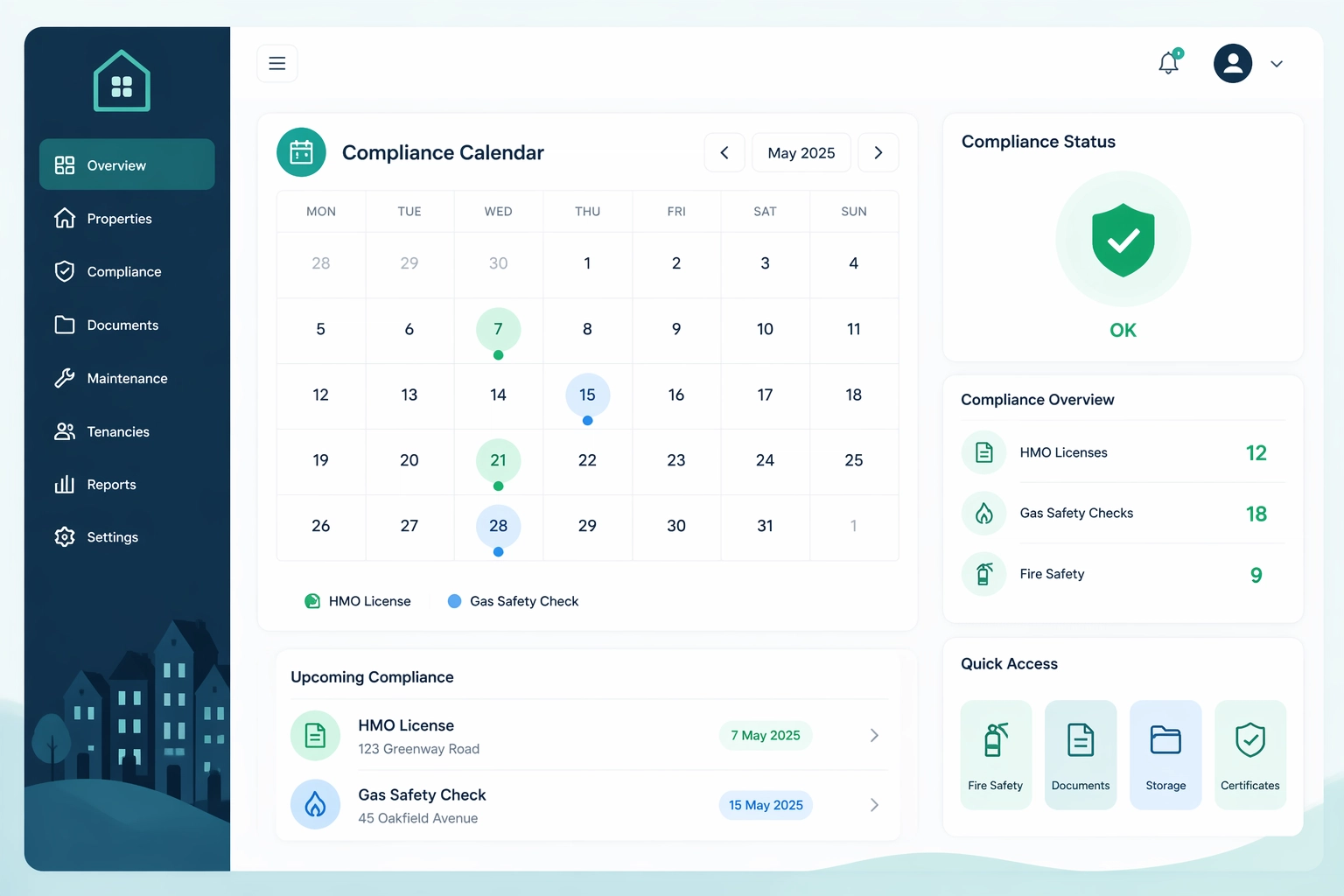
The Fix: Stop using phone reminders. You need a recurring Compliance Calendar. LandlordApp’s system triggers alerts 30, 60, and 90 days before an expiration. It gives you enough lead time to book an engineer before the deadline hits.

3. Sloppy Digital (and Physical) Document Storage
Where is your current EPC? If you had to find it in 30 seconds, could you?
Keeping certificates in a messy "Downloads" folder or a physical ring binder is a liability. During an inspection, the Council Officer wants to see the full trail. If you can’t produce the Right to Rent checks, deposit protection certificates, and safety logs instantly, you look unprofessional. Unprofessional landlords get closer scrutiny.
The Fix: Use a secure, cloud-based property management platform. Upload every doc to the specific property or room profile. Access them from your phone while standing in the hallway during a spot check. Having a digital "Vault" ensures that even if your phone breaks, your compliance records are safe.
4. Failing to Serve "Prescribed Information"
Protecting the deposit is step one. Step two is serving the Prescribed Information (PI).
If you fail to serve the PI within 30 days of receiving the deposit, you can’t use a Section 21 notice (while they still exist) and you could be liable for up to 3x the deposit amount in compensation. Many R2R operators miss this during the rush of a tenant swap. With the high turnover inherent in HMOs, this oversight can quickly stack up across multiple rooms, leading to thousands in potential liabilities.
The Fix: Automate your onboarding. Your system should flag "Deposit Received" and immediately prompt for "PI Served." Don't move a tenant in until the digital paper trail is complete.
5. Ignoring the Impact of the Renters’ Rights Act
The legal landscape changed. Outdated tenancy agreements are more than just "old": they are legally dangerous. Using a template from 2021 in 2026 is asking for a Rent Repayment Order (RRO).
The Act has fundamentally shifted how periodic tenancies work and removed the ability to "blanket ban" certain tenant types. If your contract contains unenforceable clauses, the entire document could be called into question during a dispute.
New regulations affect:
- Notice periods: Standardizing how and when you can regain possession.
- Possession grounds: Replacing Section 21 with more robust, evidence-based grounds.
- Rent Increases: Mandatory wording and specific timeframes for increases.
- Pets: You can no longer unreasonably refuse pets, but you can require insurance.
The Fix: Ditch the static Word doc templates. Use a system that integrates with updated, compliant AST (Assured Shorthold Tenancy) generators. Review your "House Rules" to ensure they don't contradict new statutory rights.

6. Zero Audit Trail for Maintenance
The council isn't just looking for a working fire alarm. They want to see your history of testing it.
If a tenant claims a repair wasn't handled, and you don't have a time-stamped log of the request, the contractor’s quote, and the completion photo, the council will side with the tenant. Manual tracking (WhatsApp/Email) makes it impossible to reconstruct a defense. In the world of HMOs, maintenance isn't just about fixing things: it's about proving you fixed them.
The Fix: Centralize maintenance logs. Every time a tenant reports a leak via your self-serve portal, the system should timestamp it. When the plumber fixes it, upload the invoice immediately. This builds a bulletproof audit trail that protects you from "disrepair" claims.
7. Manual Rent Chasing vs. Compliance Links
Wait, how is rent chasing a compliance issue?
In many cases, if you want to take legal action for arrears, your compliance must be perfect. If you haven't served the right documents (EPC, How to Rent guide, Gas Safety), your possession claim will be thrown out of court. Manual rent chasing often leads to missing these critical links because you're too focused on the cash flow to notice the missing paperwork.
The Fix: Use Smart Rent Collection. LandlordApp automates the chase via WhatsApp and adds late fees automatically. More importantly, it keeps your property "Legal-Ready" so that if you do need to evict for arrears, your paperwork is already in order.

The Solution: Build a Compliance Machine
Compliance shouldn't be a "monthly task." It should be an automated background process. As you scale from 3 properties to 30, the complexity doesn't just add up: it multiplies.
LandlordApp was built by working HMO operators who know the pain of a council inspection. We didn't just build a dashboard; we built a safety net.
- Compliance Calendar: Automatic countdowns for every certificate across your entire portfolio.
- Smart Alerts: WhatsApp and email nudges before you're in the red.
- Document Vault: One-click access to every PDF for every room, property, and landlord.
- AI Portfolio Agent: Our AI doesn't just track dates; it catches underperformers and compliance gaps before they cost you money. It analyzes profit trends and flags when a property's maintenance costs are eating your ROI.
Stop gambling with your license and your livelihood. The cost of a software subscription is a fraction of a single council fine.
Grow your portfolio without the compliance anxiety. Get started with LandlordApp for free (up to 3 properties).
Want this in one dashboard?
LandlordApp.io is free forever for up to 3 properties. No credit card, no trial clock.
Open the app